


Corporate Group Transportation in Chicago: A Planning Guide
Successful corporate group transportation in Chicago starts with one accurate itinerary, not a collection of separate ride requests. Airport arrivals, hotel check-ins, meetings, a convention, client dinners, and return trips may involve different passengers and vehicles. A written plan keeps each movement connected.
This guide explains how an office manager, meeting planner, or executive assistant can coordinate the full trip while giving travelers clear instructions.
Build one transportation schedule
List every trip by date and local Chicago time. Include the passenger names, mobile number, pickup address, exact entrance, destination, desired arrival time, luggage, and vehicle assignment. Identify one coordinator who can approve changes.
Do not write “hotel to meeting” when the hotel has several entrances or the office occupies a large campus. A street address plus a door, lobby, or loading area gives the chauffeur a usable meeting point.
Work backward from the required arrival. Add boarding time and a traffic allowance. Ten executives leaving a hotel do not enter a vehicle as quickly as one traveler leaving a house.
Coordinate O’Hare and Midway arrivals
Collect airline, flight number, arrival airport, terminal, and passenger phone. Flight tracking helps dispatch react to normal schedule changes, but the passenger should still communicate after landing.
Choose curbside pickup or meet-and-greet before travel. Curbside service is efficient when travelers can collect their bags and call from the designated pickup area. Meet-and-greet adds an indoor greeting and can help a visiting executive or international group navigate the terminal.

Group only arrivals that are reasonably close. Saving one vehicle is rarely worthwhile if the first traveler must wait a long time for a delayed colleague. See current Chicago airport transportation rates when comparing plans.
Choose vehicles by each trip
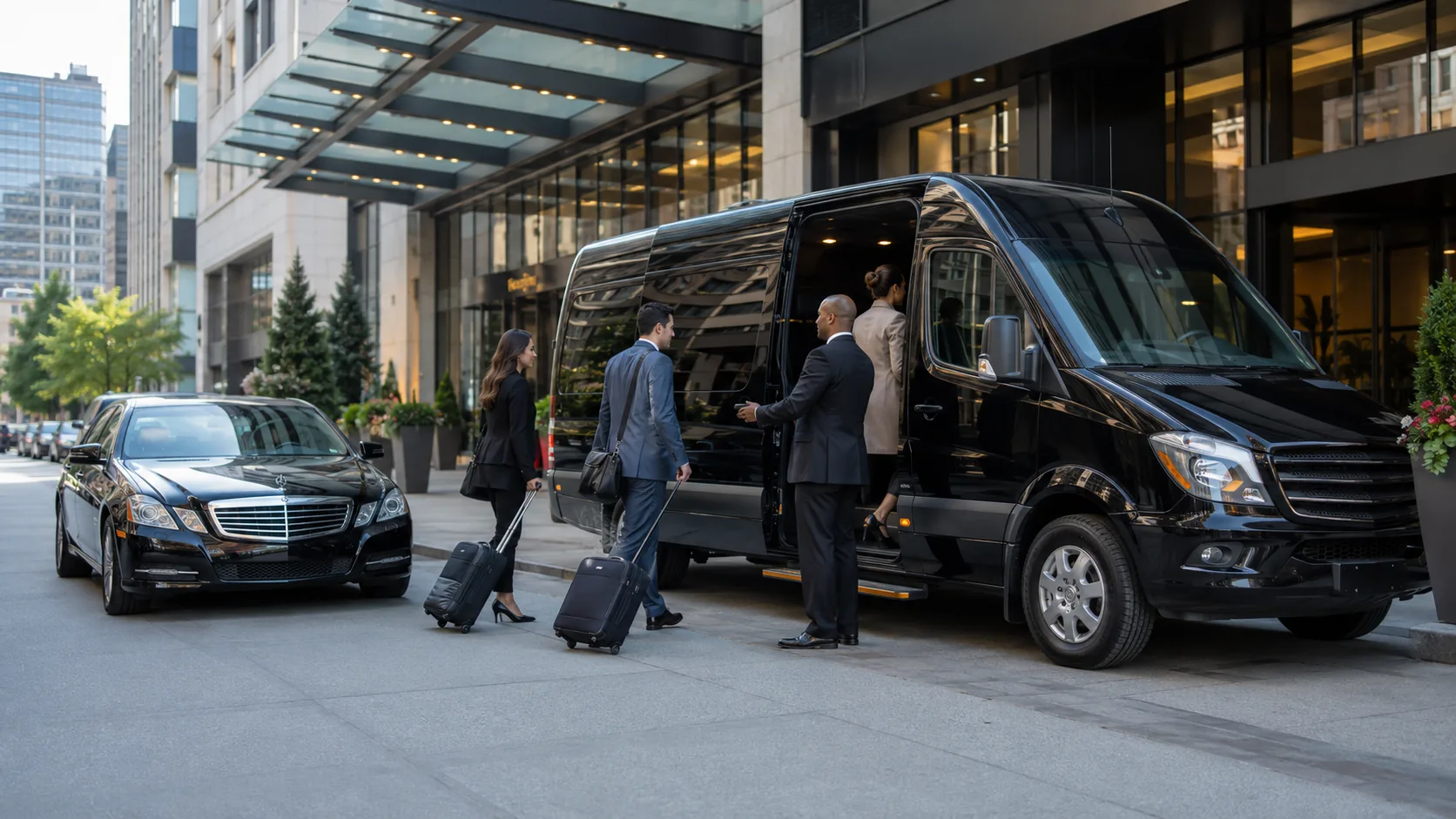
A sedan suits one or two executives. An SUV adds luggage room. An executive van or Sprinter-style vehicle keeps a team together. A larger bus may suit a conference group, but loading access and the passenger count must be confirmed.
Do not use advertised seat count as the only measure. Carry-on bags, presentation cases, coats, mobility needs, and full-size luggage affect useful capacity. A mixed fleet may work better than one vehicle type all day.
Plan meetings and conventions around arrival time
For McCormick Place or another large venue, identify the building, hall, or transportation gate. “McCormick Place” alone is not precise enough. Exhibitors may need an earlier trip than attendees, while senior leaders may leave for a private meeting before the show closes.
Place every fixed appointment on the master itinerary. Then protect it with a reasonable buffer. Chicago traffic can change because of construction, weather, sporting events, festivals, and normal rush periods.
Handle multi-stop days without confusion
Number the stops and attach passengers to each leg. State whether the vehicle waits or returns later. Hourly service may suit a changing executive schedule; point-to-point reservations may be more practical for fixed transfers.
Keep one version of the itinerary. If a meeting changes, update the central document and notify dispatch. Separate texts from several passengers often create conflicting instructions.
Protect the client dinner and return plan
Book the evening movement before the business day begins. Confirm the restaurant entrance and reservation time. If clients return to different hotels, decide whether one vehicle makes several stops or separate cars leave together.
Publish a firm departure time and meeting door. The chauffeur may not be able to remain directly outside a busy restaurant. A clear contact and pickup point prevent the group from scattering.
Create a simple traveler message
Send each traveler only what is needed: pickup time, location, vehicle or chauffeur contact method, destination, and coordinator. Include airport instructions for arriving passengers. Avoid sending a long internal operations sheet to every guest.
Reserve the complete corporate itinerary
When requesting service, provide the full schedule, passenger counts, flight details, luggage, exact entrances, and billing contact. Call 773-669-5596 or reserve corporate transportation online. A coordinated plan gives the group one dependable transportation system from arrival through the final return.
Confirm billing and service standards
Before travel, name the billing contact and decide whether parking, tolls, airport fees, waiting time, or schedule extensions require approval. Corporate travelers should not have to resolve account questions at the curb. If a purchase order, cost center, or trip reference must appear on the invoice, provide it with the reservation.
Also state the service expectations that matter to the group. These may include a quiet vehicle, space for confidential calls, bottled water, a particular passenger order, or a requirement that two vehicles arrive together. Keep requests practical and attach them to the correct trip.
Complete a final-day check
On the business day, verify flights, the first pickup, the passenger manifest, and the evening return. Send changes through the coordinator. This short review catches most problems before the first traveler enters a vehicle.