


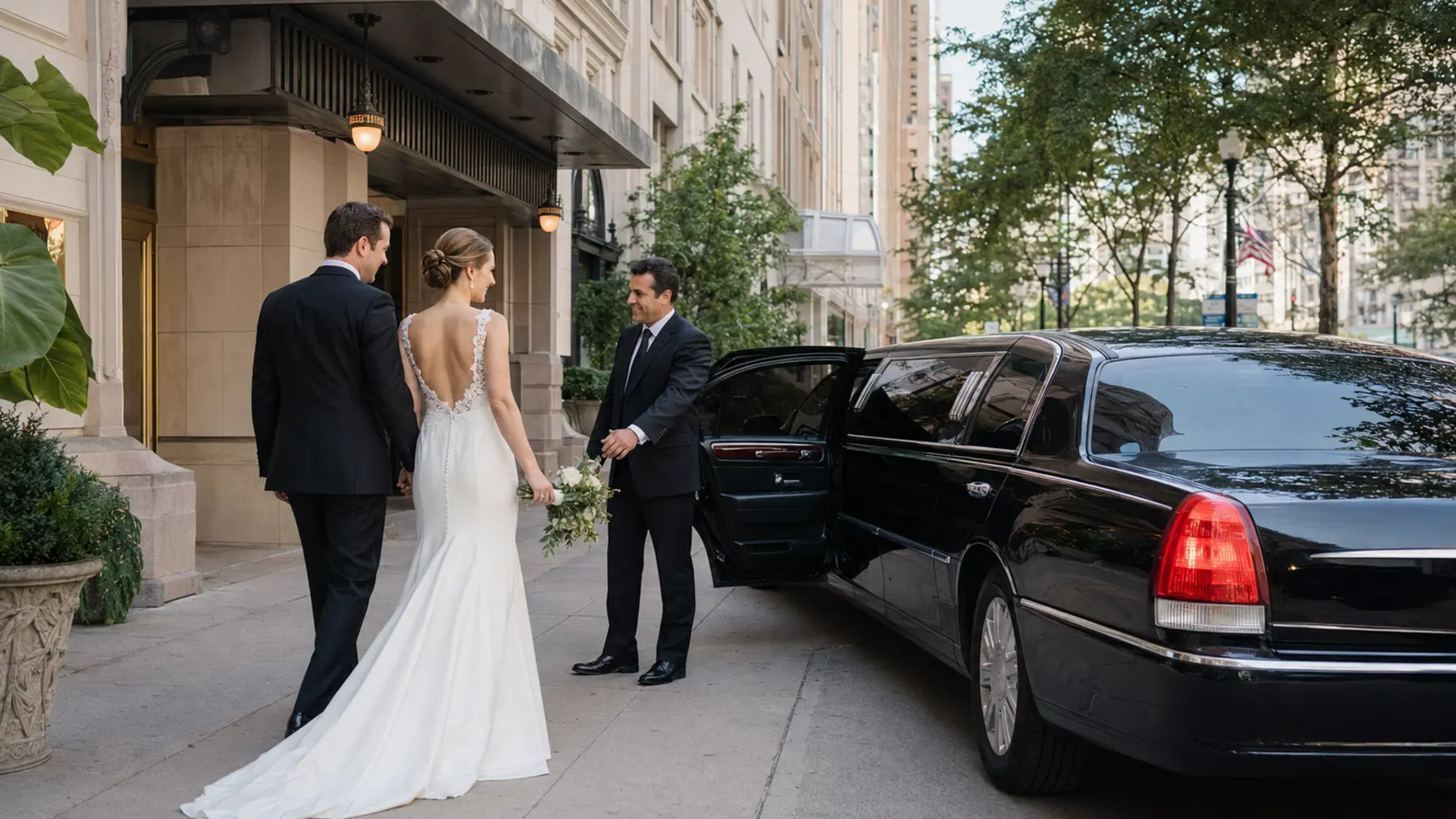
Chicago Wedding Transportation Timeline: A Practical Guide
A Chicago wedding transportation timeline should begin with the ceremony arrival time and work backward. Add time for loading, Chicago traffic, photographs, and the small delays that happen when a wedding party travels together. The goal is not to fill every minute. It is to create enough room for the day to feel calm.
This guide covers the full trip: hotel pickup, ceremony, photographs, reception, and late-night returns. It also explains when one vehicle works and when separate cars make more sense.
Six to nine months before: map every required trip
Write down each address before choosing a vehicle. Include getting-ready locations, hotels, the ceremony, planned photo stops, reception venue, and final return addresses. Note who must travel on every segment. The wedding party may need a large vehicle, while parents may prefer a sedan or SUV.
Now identify fixed times. The ceremony start and venue access rules usually cannot move. Hair, makeup, photography, and hotel checkout may offer more flexibility. Share the first working schedule with your transportation company early, especially for a Saturday during Chicago’s busy wedding season.
Review the Chicago wedding vehicle options by passenger count and luggage space. Never select a vehicle only by its advertised seat total. Formal clothing, flowers, and personal items need room.
Two to three months before: confirm people and vehicles
Build a passenger list for each trip. Put names beside the pickup location and vehicle. This reveals common gaps, such as parents who need a ride to the ceremony but plan to leave the reception early.
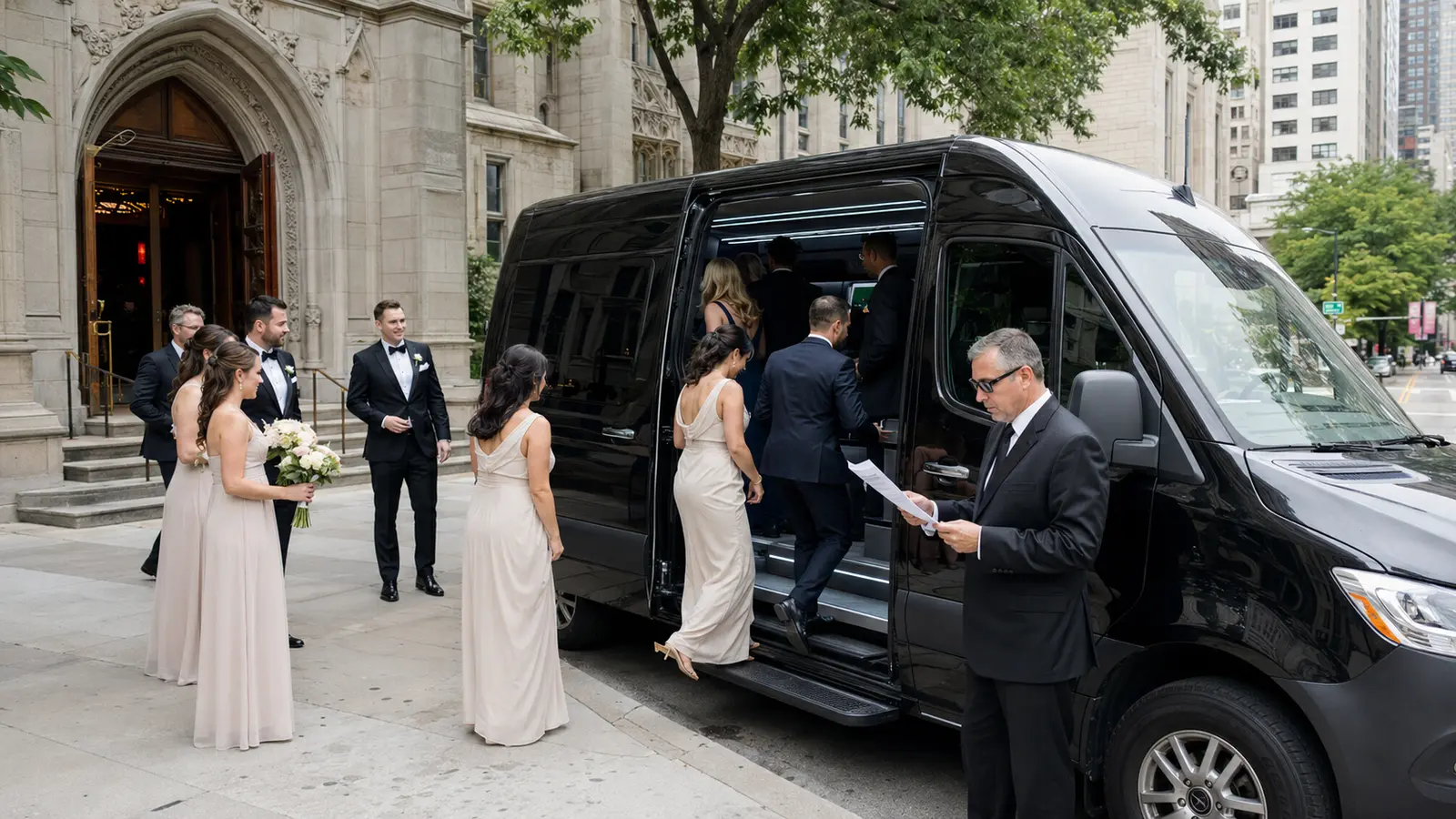
A sedan works well for a couple or two guests. An SUV adds luggage and dress room. A stretch limousine creates one shared wedding-party ride. A Sprinter-style vehicle can be easier to board and may suit a larger group. Several vehicles may be better than forcing every passenger onto one schedule.
Ask about child seats, mobility needs, large dresses, coolers, décor, or overnight bags now. These details affect capacity. They should not appear as surprises when the chauffeur arrives.
Four weeks before: build the Chicago driving plan
Chicago mileage does not equal Chicago driving time. A short trip through the Loop can slow because of construction, a festival, a sports event, bridge activity, or hotel loading traffic. Suburban travel can change quickly near expressway interchanges.
Set a desired arrival time for every stop. Then add loading time and a traffic buffer. The bride or groom may need ten minutes to leave a hotel room, reach the lobby, arrange the dress, and board. A wedding party needs longer.
If guests are flying into town, book O’Hare or Midway airport transportation separately. Flight tracking and luggage needs belong on those reservations, not inside the wedding-day vehicle schedule.
One week before: issue one final transportation sheet
Choose one transportation contact who is not the couple. Give that person the chauffeur or dispatch contact, passenger list, addresses, venue entrances, and timing. A planner, attendant, or trusted relative can handle questions while the couple stays focused on the day.
Send the same final schedule to the planner, photographer, transportation company, and key family members. Label old versions as outdated. Conflicting timelines cause more trouble than a small delay.
Confirm exact entrances. A large Chicago hotel may have a front drive, side entrance, and loading area. A venue may direct buses and limousines to a different door from guest cars.
Wedding morning: protect the first departure
The first pickup affects every later event. Ask passengers to be fully dressed and in the lobby before the vehicle arrives. Keep flowers, phones, and personal bags together. One missing item can consume the entire buffer.
Schedule the wedding party to reach the ceremony early enough for unloading and private preparation. Do not plan a curb arrival at the exact ceremony time. City traffic and crowded venue entrances make that approach fragile.
Between ceremony and reception: control the photo route
Limit the photo plan to locations that fit the available time. Downtown Chicago, the lakefront, and museum-area stops may look close on a map. Parking rules, walking, loading, and weekend traffic can turn several quick stops into a rushed hour.
Tell the chauffeur the route before the day begins. The photographer should know the departure deadline for the reception. If weather changes, use one preselected indoor or covered alternative instead of debating choices inside the vehicle.
Reception arrival and late-night returns
Decide whether the original vehicle remains on standby or returns at a fixed time. Hourly service can support photo stops and schedule changes. Point-to-point reservations may suit simple guest returns.
Create at least two return times for guests when the reception ends late. Older relatives and families may want the earlier trip. The wedding party may need the final departure. Confirm the passenger count for each return so the correct vehicle arrives.
Keep the last pickup location simple and well lit. Guests should know the exact door. A clear meeting point prevents scattered calls after music ends and venue staff begin closing rooms.
Reserve the timeline, not just the limousine
A vehicle cannot repair an unrealistic schedule. Send the addresses, passenger counts, desired arrival times, photo plan, and return needs when requesting service. That information lets the transportation team find gaps before the wedding day.
Call 773-669-5596 or reserve Chicago wedding transportation online. Build in breathing room now, and the couple can enjoy the ride when the day arrives.